Photographing GEM Genève for SRK: Diamonds, Rare Gemstones and the Stories Hidden in Light
There are exhibitions where you document products, and there are exhibitions where every object carries decades of geological history. GEM Genève belongs to the second category.
Together with gemologist Elina Kulda, we covered Shree Ramkrishna Exports (SRK) booth throughout the exhibition - imagery that reflected the precision and craftsmanship of their diamonds during one of the industry's most respected gem exhibitions. What we didn't expect was that the assignment would grow well beyond diamonds.
As the show went on, independent gemstone dealers started stopping by our setup. They'd seen the photographs on our monitor and asked a simple question: would you photograph one of my stones? By the end of the exhibition we'd photographed some of the most remarkable gemstones we've ever worked with, including an 80-carat emerald and a roughly 40 carats Paraíba tourmaline.
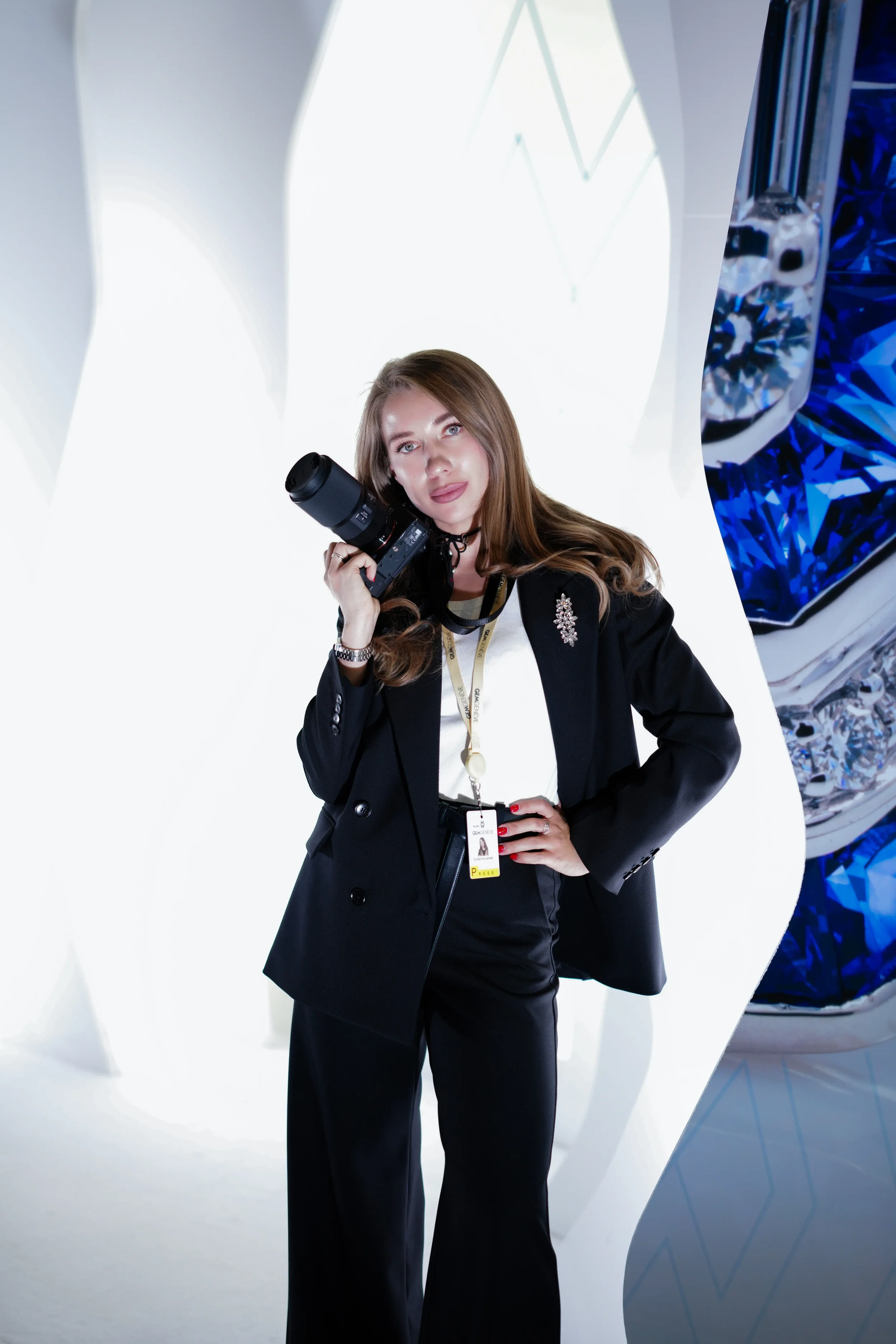
On set at GEM Genève, Palexpo, Geneva.
Gemstone photography is not macro photography
People often assume the two are the same. They aren't. A gemstone behaves more like a small architectural object built entirely from light. Every facet redirects reflections, every internal inclusion changes how light travels through the crystal, and moving a light source by a few millimetres can completely change how a stone reads on camera.
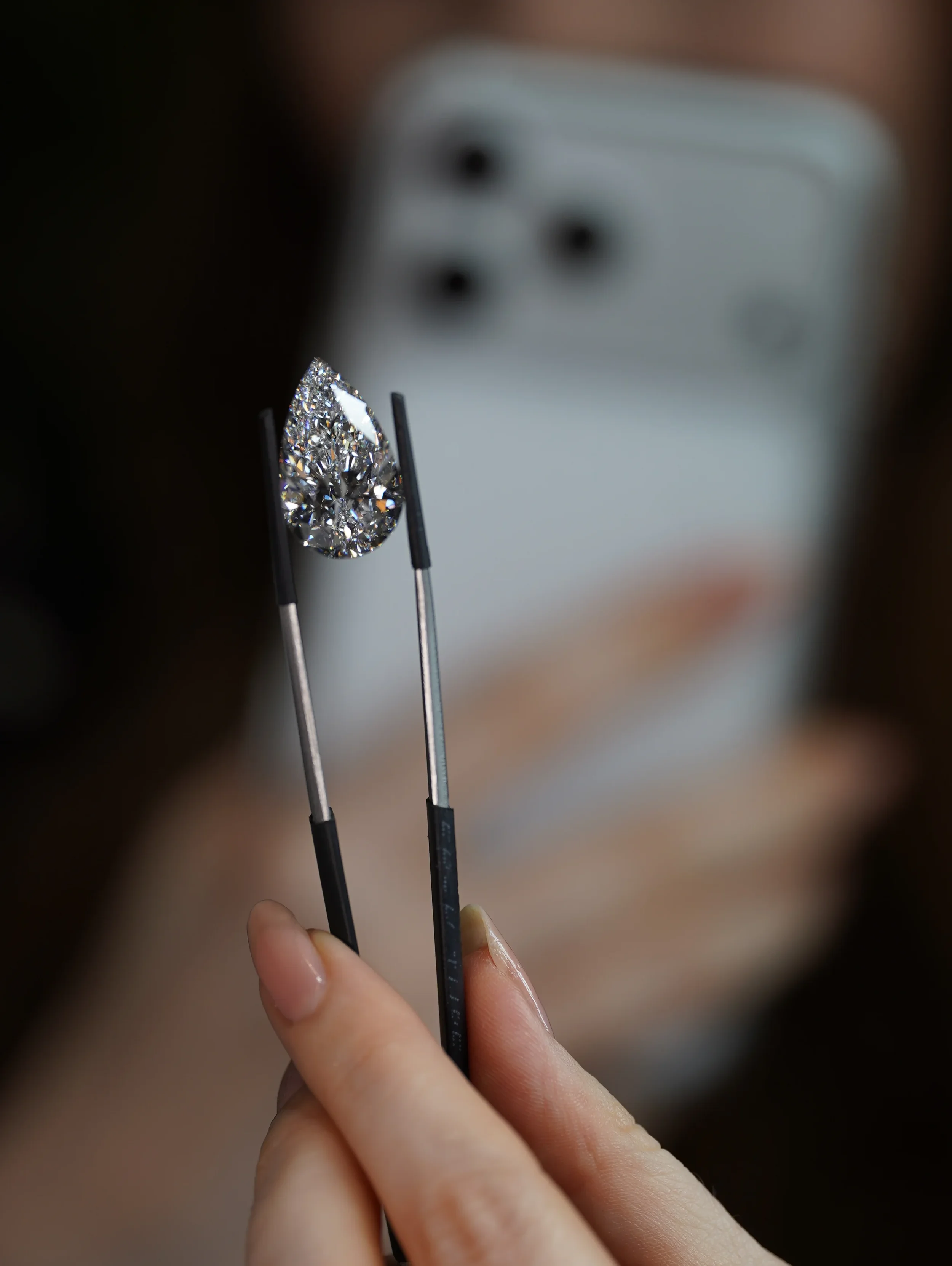
Precision work: every angle changes how a diamond reads.
Unlike jewellery photography, where the metal setting often defines the shape, a loose gemstone relies entirely on its interaction with light. The photograph only works if the viewer can sense depth inside the crystal - and with some of the rarest stones in the world in front of the lens, that challenge only gets bigger.
Working alongside Elina Kulda, an independent gemologist, throughout the exhibition changed how we approached this. Instead of chasing a beautiful reflection, you start understanding what actually makes a stone valuable: where colour zoning needs to stay visible, why certain inclusions shouldn't disappear, which optical traits signal authenticity. Those conversations changed our lighting almost as often as they changed our understanding of the stones.
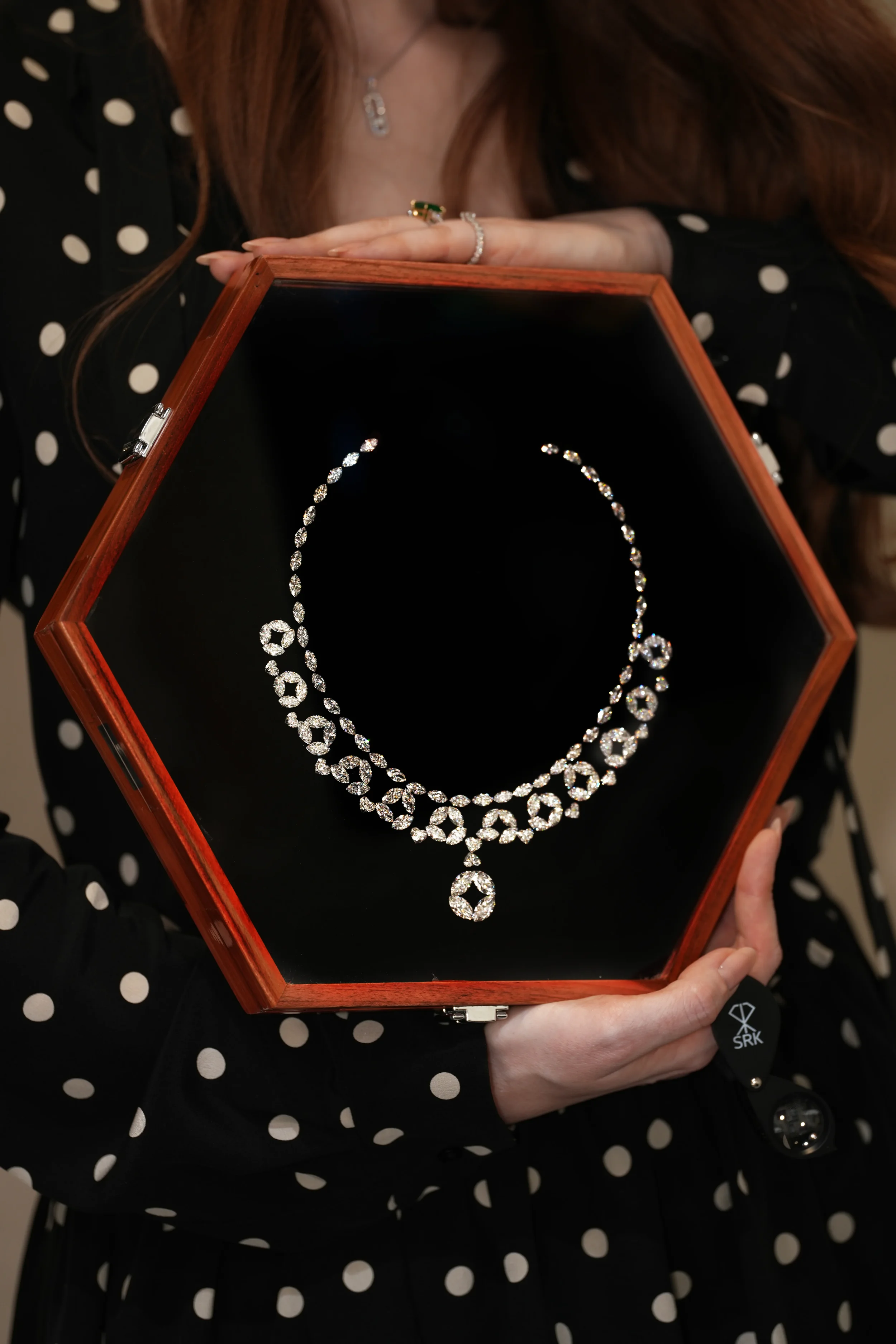
One of SRK's pieces, ready for its close-up.
The emerald that seemed to hold a forest inside
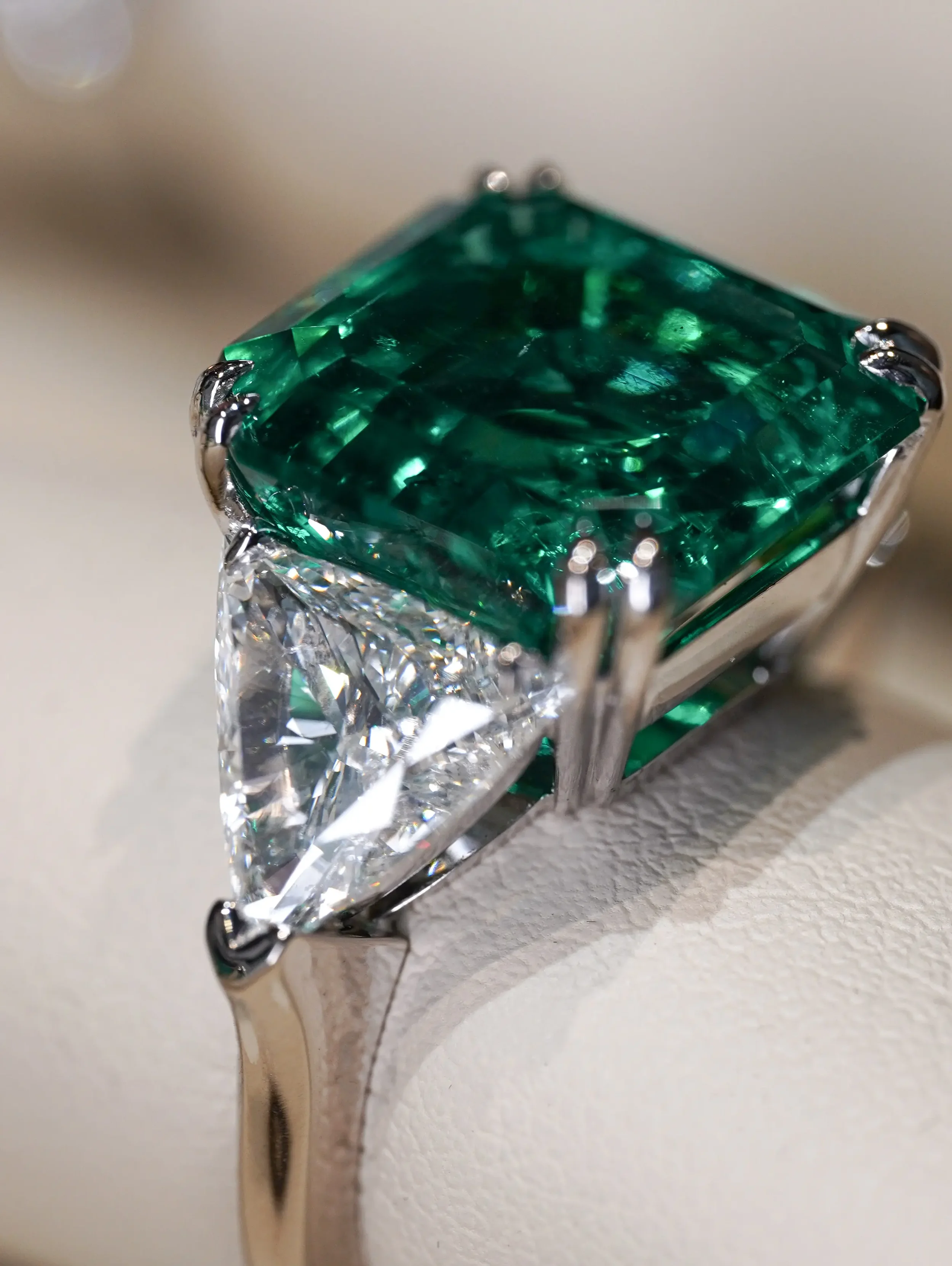
Metal defines shape. Light defines everything else.
Among everything we photographed, one stone stood apart: an 80-carat emerald. Size alone never defines value in a gemstone - colour, transparency, crystal quality and treatment history matter far more.
Most emeralds contain internal inclusions formed during natural growth. Rather than flaws, these are often called the stone's jardin - French for garden - because under magnification they look like tiny landscapes suspended in the crystal. These same fractures are why most emeralds go through some degree of oil treatment: a colourless oil introduced into surface fractures shortly after cutting, reducing their visibility without changing colour. Labs classify the degree of treatment from "No Oil" (exceptionally rare) through "Minor," "Moderate" and "Significant."
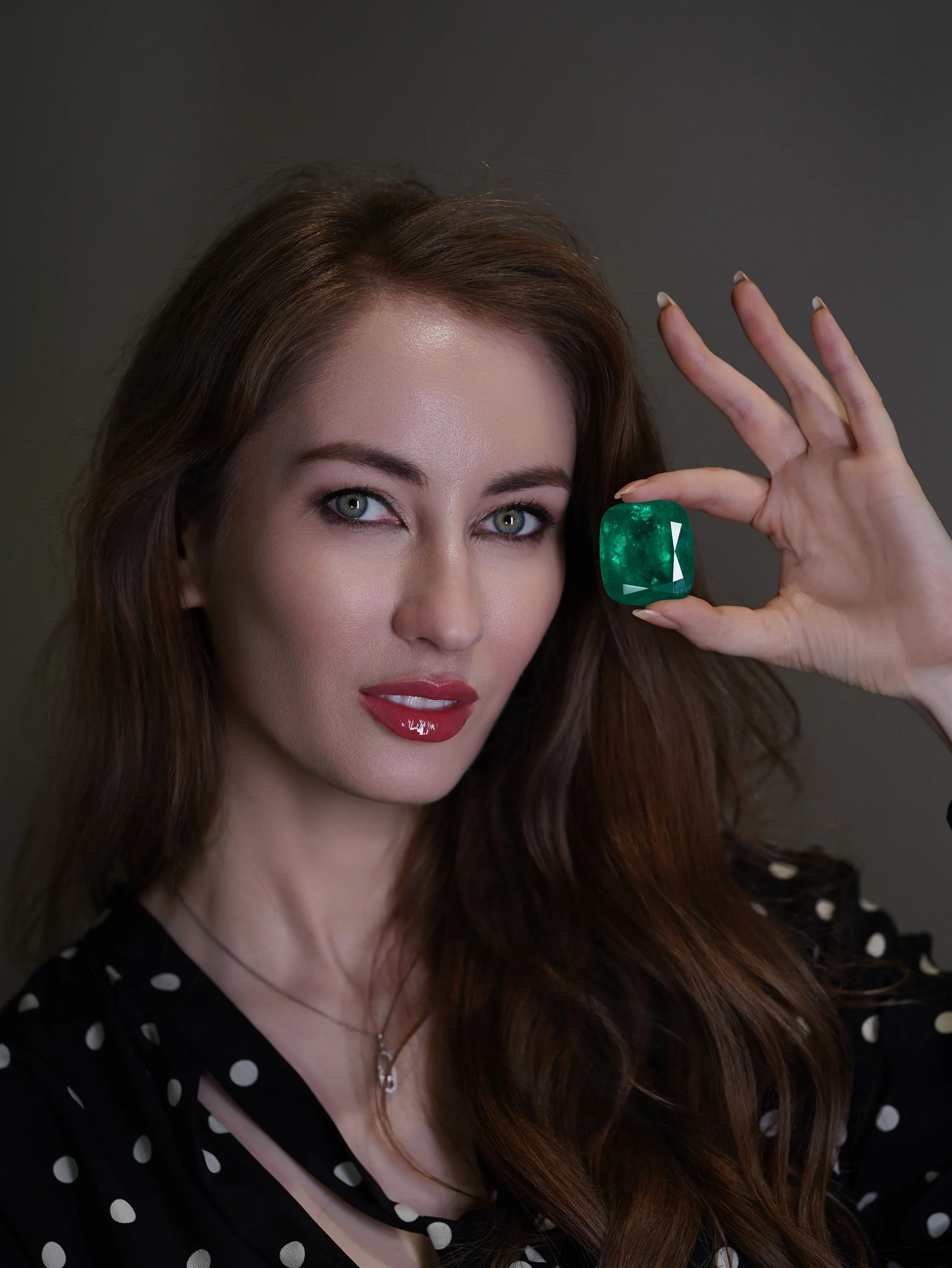
The 80-carat emerald, held up to the light.
A large emerald with little or no oil enhancement is genuinely uncommon, which is why serious collectors pay close attention to lab reports. Once we understood what made this particular stone unusual, the brief changed. The image wasn't meant to show a green gemstone. It needed to show what made this one different from the next.
The Paraíba tourmaline
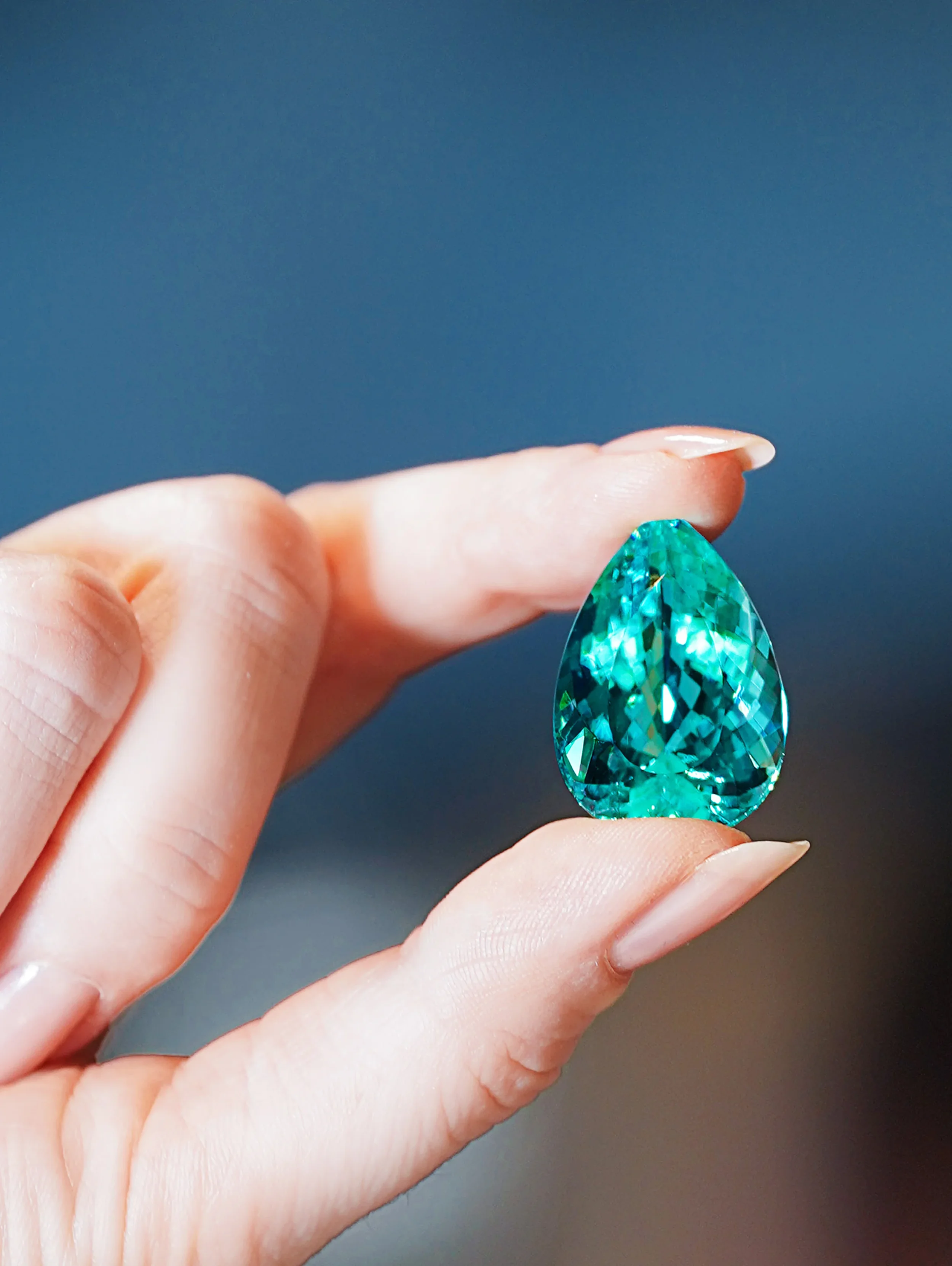
The Paraíba tourmaline, roughly 40 carats.
If the emerald was about depth, the roughly 40 carats Paraíba tourmaline was pure electricity. Its colour doesn't behave like an ordinary blue or green - it looks almost self-lit. That comes down to chemistry: trace amounts of copper, sometimes manganese, produce the neon blue, turquoise and green that define a true Paraíba.
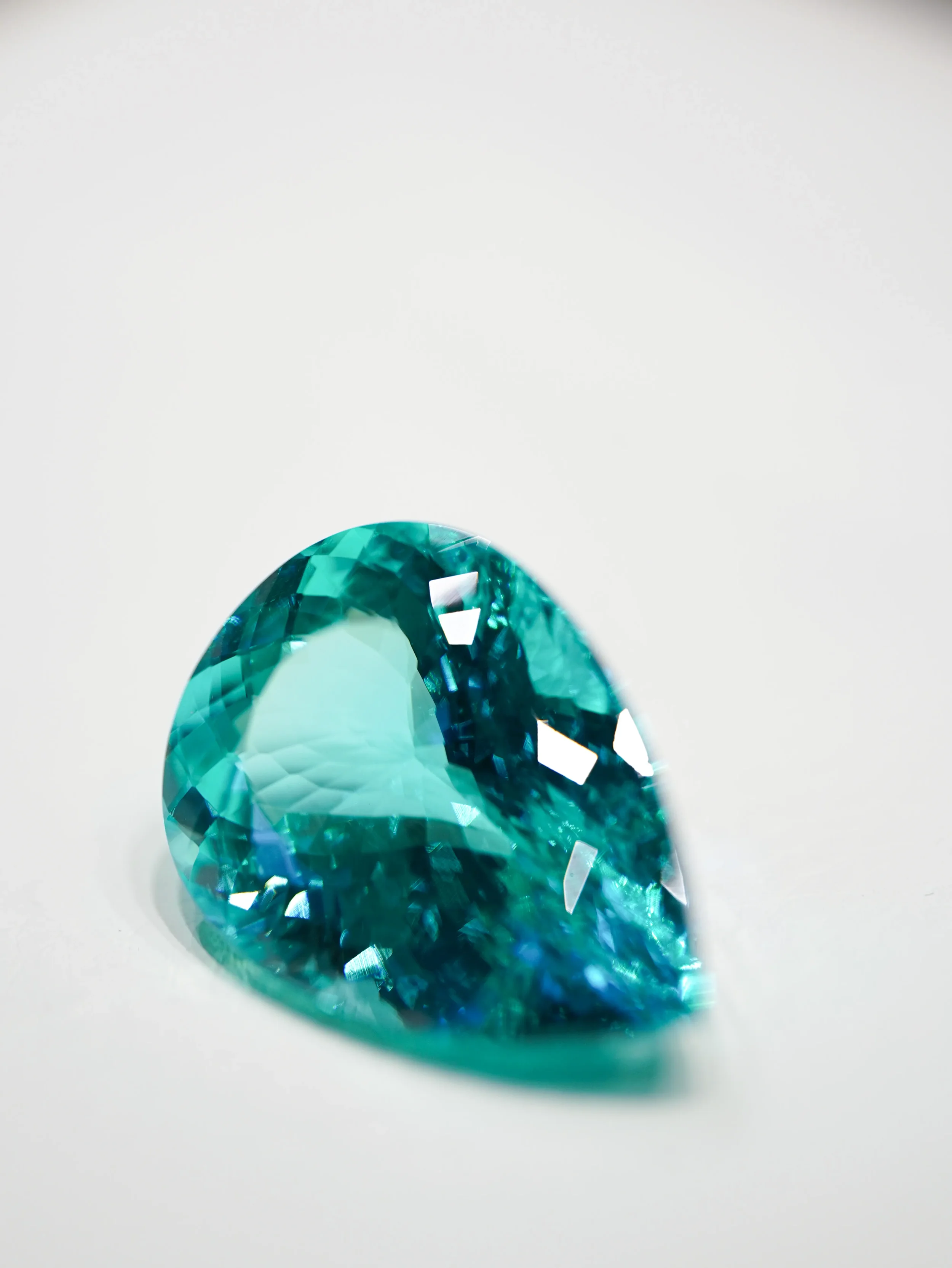
Colour that comes from chemistry, not filters.
The original deposits were found in Brazil in the late 1980s, after years of searching by miner Heitor Barbosa. The discovery reshaped the coloured gemstone market almost overnight. Copper-bearing tourmalines have since turned up in parts of Africa, but large, vividly saturated Paraíbas remain among the rarest coloured stones in the world - and photographing one is harder than it sounds. A camera can easily exaggerate or flatten that neon glow. Our job wasn't to make the stone more dramatic than it is. It was to reproduce exactly what we saw under controlled light.
"Are those really my stones?"
One of the moments that stuck with us had nothing to do with equipment. A few of the dealers came back to see the finished images. We're used to clients checking focus or colour accuracy - this was different. They looked at the back of the camera for a long moment, then looked back at their own gemstones. One of them smiled and said, quietly: "Wow. Are those really my stones?"
The others laughed - not because the photos looked unreal, but because they looked exactly like the stones did under perfect light, better than most people ever get to see them. These were professionals who'd spent years buying, selling and studying exceptional gemstones. Watching them get genuinely surprised by images of stones they knew intimately felt like real recognition that we'd captured something true.
Diamonds, coloured stones, and two different worlds
SRK was our client for the whole exhibition, but spending time among coloured gemstone specialists highlighted a real difference between the two worlds. Diamonds are graded against standardised international systems. Coloured gemstones invite a more layered conversation - origin, treatment, crystal structure, saturation, history. Each stone carries its own character that doesn't always reduce to a number on a certificate.
Watching diamond experts, dealers and gemologists compare notes throughout the show was one of the most rewarding parts of the trip. GEM Genève felt less like a marketplace and more like a gathering of people who genuinely care about minerals that took millions of years to form.
Why GEM Genève is different
Many jewellery exhibitions centre on brands. GEM Genève centres on the stones themselves and the people who know them best - many with direct relationships to the mines, the cutters, or decades spent building a single collection. That creates space for actual conversation instead of a rushed schedule of appointments, and for photographers, it opens doors that rarely open elsewhere.
We arrived expecting to photograph diamonds for one of the industry's leading companies. We left having done that, plus photographing rare coloured gemstones, working alongside a gemologist, and learning more about stones in a week than we expected to learn in months. It came down to trust - SRK trusted us with their work, independent dealers trusted us with some of their rarest pieces, and the reward was hearing someone look at their own gemstone on our screen and ask, with real surprise, if it was really theirs.
New Moon Agency photographs jewellery and gemstones for brands, dealers and collectors across Austria and internationally - from studio catalogue work to international trade fairs like GEM Genève. See our jewellery photography services or get in touch to talk about your project.
